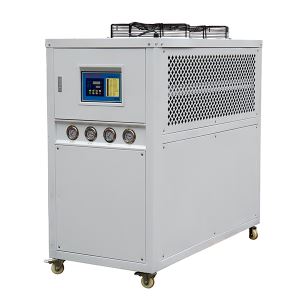
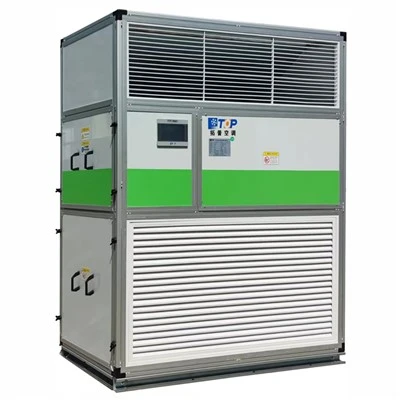
Heating,cooling and humidity control,chilled water temperature from 5 degree celsius to 20 degree celsius,hot water Highest temperature can be 100 degree celsius.
What is Heat Pump?
A heat pump is part of a home heating and cooling system and is installed outside your home. Like an air conditioner such as central air, it can cool your home, but it’s also capable of providing heat. They are powered by electricity and transfer heat using refrigerant to provide comfort all year round. Because they handle both cooling and heating, homeowners may not need to install separate systems to heat their homes. In colder climates, an electric heat strip can be added to the indoor fan coil for additional capabilities.
Advantages of Heat Pump
Energy-efficient
These pumps are becoming popular because they are energy-efficient – they don’t depend on fossil fuel usage to produce cool and warm air. This means that consumers will use less gas and electricity with heat pumps compared to other systems, as well as less money. This will help reduce greenhouse gas emissions, taking the pressure off both the planet and your budget.
Minimal maintenance
One appealing factor concerning heat pumps is that they don’t actually need too much maintenance. Whilst a yearly system check is necessary, this can be performed by the homeowner, meaning that forking out cash for a professional can be avoided. This is beneficial for homeowners wanting to save money in the long run.
Quiet
Another benefit to using a heat pump is that they are pretty much soundless. These products have been specially designed to produce a minimal standard of noise when it comes to functioning. If you get irritated by your noisy air conditioner, it might be time to switch it out with a heat pump.
Requires only one system
One of the most attractive advantages of heat pumps is that they function as your area’s source for both heating and cooling. This two-in-one system operates best in mild climates and can save you from purchasing both a furnace and an air conditioner.
-
![Air-cooled Heat Pump Unit]() Air-cooled Heat Pump UnitSANHER Air-cooled heat pump unit condenser using "V"-type structure, not only in line with the characteristics of air distribution, but also can have a larger maintenance and maintenance space. The heat exchanger consists ofread more
Air-cooled Heat Pump UnitSANHER Air-cooled heat pump unit condenser using "V"-type structure, not only in line with the characteristics of air distribution, but also can have a larger maintenance and maintenance space. The heat exchanger consists ofread more -
![Air-cooled Heat Pump Chiller]() Air-cooled Heat Pump ChillerAir-cooled heat pump chiller , air as a source of heat and cold, water as coolant. Working with fan coil units, air handling units, under heating, other end equipment, It can form a centralized cooling and heating system. With simpleread more
Air-cooled Heat Pump ChillerAir-cooled heat pump chiller , air as a source of heat and cold, water as coolant. Working with fan coil units, air handling units, under heating, other end equipment, It can form a centralized cooling and heating system. With simpleread more -
![Heating and Cooling Water Source Heat Pump]() Heating and Cooling Water Source Heat PumpCooling system alike normal chiller unit,but it extracts and disspates heat by way of water,it is an option worth considering when your living area close to well,lake,other water source.read more
Heating and Cooling Water Source Heat PumpCooling system alike normal chiller unit,but it extracts and disspates heat by way of water,it is an option worth considering when your living area close to well,lake,other water source.read more -
![Best Air Source Heat Pump]() Best Air Source Heat PumpAir source heat pump with three operating mode,appealing to customers.read more
Best Air Source Heat PumpAir source heat pump with three operating mode,appealing to customers.read more


Why Choose Us?
High quality
Our products are manufactured or executed to very high standards, using the finest materials and manufacturing processes.
Rich experience
Dedicated to strict quality control and attentive customer service, our experienced staff is always available to discuss your requirements and ensure complete customer satisfaction.
Quality control
We have professional personnel to monitor the production process, inspect the products and ensure that the final product meets the required quality level standards, guidelines and specifications.
24h online service
We try and respond to all concerns within 24 hours and our teams are always at your disposal in case of any emergencies.
Types of Heat Pump
Air source heat pumps
Air source heat pumps use the thermal energy from the air outside your home to provide heating and hot water. This type of heat pump is the most popular as it can be installed outside the home. Despite using the air, these heat pumps will also operate in colder climates because although the air outside is cooler, there is still enough thermal energy in the air available to heat your home.
Air to air heat pumps
Air to air heat pumps are another variation of the air source heat pumps that use the air from outside to transfer it to the air inside your home. This is done through a series of fan units and can increase the temperature of the air in each room. Air to air heat pumps are only able to heat or cool your home - they don’t provide hot water like air to water heat pumps do.
Ground source heat pumps
Ground source heat pumps, or geothermal heat pumps as they’re sometimes also known, extract heat from a mixture of water and antifreeze that circulates through pipes buried in the ground, either by a vertical or horizontal loop, to transfer to your home.
Water source heat pumps
Water source heat pumps use a system embedded in a water source, such as a lake, river or well, to extract energy. Like ground source heat pumps, this system provides one of the most reliable sources of hot water and heating thanks to the consistent temperature of the water outside and, as water is a very good energy carrier, is highly efficient.

All heat pumps have a so-called refrigeration circuit, i.E. An evaporator, in which there is a liquid refrigerant with a low boiling point. The refrigerant is heated by environmental heat from the air, water, or ground and becomes gaseous and evaporates at very low temperatures.
In the next step, the gaseous refrigerant enters a compressor. It compresses the refrigerant vapor, whereupon the temperature increases and the volume decreases. For this process, heat pumps require electrical energy (electricity) - the lower the temperature difference between the heat source and the refrigerant, the less electricity is needed.
In the condenser, the gaseous refrigerant releases its heat to a heat distribution and storage system and is then transferred to the heating circuit. The heat can eventually be used to heat the building, for example via underfloor heating, or to heat the hot water. As a result, the temperature of the refrigerant drops again, and it slowly liquefies, but it is still under high pressure.
Through the expansion valve, the refrigerant loses the remaining pressure and is brought from a high temperature level back to a low one. Then the process starts again, and so the cycle of the heat pump runs over and over again.
Main body
The main body contains all the major heat pump system components that extract heat from the outside air. They often look like large air conditioning units. The main body houses the fans and refrigerant coils, alongside the power unit and compressor, alongside any other associated valves and pipes. As the main body houses all the main heat pump components, it’s important that it’s serviced regularly to ensure it maintains a good condition.
Evaporator
The evaporator is a low temperature heat exchanger where refrigerant enters as a liquid which then absorbs heat from the heat source through a process of evaporation. This leaves a low temperature vapour. The evaporator is crucial for changing the refrigerant from a liquid to a gas.
Compressor
The refrigerant that absorbs heat from the outside air passes through one of the most important heat pump system components, known as a compressor. The increase in pressure facilitated by the compressor causes the refrigerant to change state from a liquid to a gas which in turn increases the temperature of it.
Condenser
Another one of the most important heat pump system components is the condenser. This is located towards the outside of the heat pump and collects or releases heat depending on the outside temperature. The refrigerant enters the condenser as a high temperature vapour and leaves as a high temperature liquid.
Fans
Fans are also crucial heat pump system components. The role of the fan is to force air though the unit so that more heat can be extracted. Air source heat pump components often include more than one fan so that a greater amount of air flows through the unit in order to improve the efficiency of extraction.
Expansion valve
The high pressure refrigerant liquid from the condenser is transported through the expansion valve which adjusts the temperature and pressure for the heat pump. This means that the refrigerant is now ready to begin the process again.
Heat distribution system
The extracted heat will then need to be distributed throughout the property via radiators or an underfloor heating system. The most efficient choice for this is underfloor heating which creates an even distribution of heat throughout the property, whilst being able to operate at lower water temperatures.
How to Choose Heat Pump
Size
A heat pump that’s too small can only meet a fraction of your needs. If it can’t keep up, you may not enjoy a comfortable environment in your house. On the other hand, a heat pump that’s too large can lead to increased energy bills, as it will use more power than necessary.To choose the right size heat pump, you’ll need to know the size of your home in square feet.
Efficiency
You should always look for a high-efficiency rating when purchasing a heat pump. This is measured in seer (seasonal energy efficiency ratio) and hspf (heating seasonal performance factor). The higher your heat pump’s rating, the more energy-efficient and cost-effective it will be.
Features
Not all heat pumps are created equal, so you should compare different models to find the best fit for your needs. Look for features like a built-in thermostat, programmable settings, and timers to help you control your energy usage and save money. You may also consider intelligent defrosting, air filtration systems, and humidity control.
Design
Different heat pumps are designed for different applications. Some are designed to be used outdoors, while others can be installed indoors. If you have the space and prefer a smaller outdoor unit, then an indoor heat pump may be more suitable for your needs.
Cost
The price of a heat pump can vary greatly depending on its size, features, and design. It’s important to set a budget and shop around for the best deal. If you’re buying an energy-efficient model, it may be more expensive upfront but could save you money in the long run.
Brand
The brand of a heat pump matters, as some are more reliable than others. Choose a brand that has a good reputation and offers quality products. Consider how long they’ve been operating in the industry and whether they offer any warranties on their products. That can give you peace of mind when making your purchase.
Application of Heat Pump
Paper industry
At production, paper making emits co2 and results in high carbon emission. Heat pumps could help in minimum carbon emission and thus in achieving sustainability. So, if you are into pulp/paper/lumber manufacturing, then heat pumps can help you in the concentration of black liquor, water heating, flash-steam recovery, and product drying.
Food and beverages
Heat pumps in the food industry can save your costs spent on gas. To your food and beverage industry, heat pumps help in the process of beer brewing and to concentrate waste beer. Not only to concentrate waste beer but also to concentrate liquid products in the dairy industry. Heat pumps in the food and beverage industry are not only a source of cost-saving but are also an environment-friendly resource.
Chemical industry
The use of heat pumps in the chemical industry has become a hot topic in the past few years due to the limitation of fossil fuels and the need to contribute towards a sustainable future. In the manufacturing of chemical salts, heat pumps are your savior in the process of concentrating salt solutions and in the treatment of the effluent process.
Offices
To heat, an office building can be immense pressure on your resources. Whether you have a small or a large office building, you need heating and air conditioning. So, heat pumps are the perfect fit for you. Without needing to think about it, your heat pump will continuously heat and cool your water and rooms and keep your employees happy and comfortable.
Hospitality
Every hotel room needs heating and air conditioning units. Therefore buying and running each system separately is incredibly expensive. This is also applicable if there is a leisure centre as part of the hotel. If you are undergoing a hotel renovation, or just looking to upgrade to a more sustainable and economic heating and cooling source we suggest installing heat pumps.
FAQ
We're well-known as one of the leading heat pump manufacturers and suppliers in China. Please rest assured to buy customized heat pump at competitive price from our factory. Contact us for more details.
-
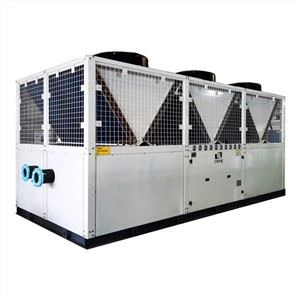
![Air Cooled Scroll Packaged Chiller]() Air Cooled Scroll Packaged ChillerThere will be 2~6 pieces scroll type compressor in this air cooled chiller , according to different capacity request.read more
Air Cooled Scroll Packaged ChillerThere will be 2~6 pieces scroll type compressor in this air cooled chiller , according to different capacity request.read more -
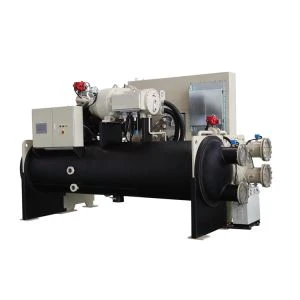
![R134a Magnetic Bearing Centrifugal Chiller]() R134a Magnetic Bearing Centrifugal ChillerWe have the advanced large on-line test bench for centrifugal chiller, each unit undergoes a full performance testread more
R134a Magnetic Bearing Centrifugal ChillerWe have the advanced large on-line test bench for centrifugal chiller, each unit undergoes a full performance testread more -
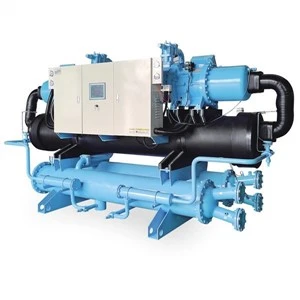
![Water Cooled Screw Liquid Chiller]() Water Cooled Screw Liquid ChillerWater cooled screw liquid chiller (dual compressor) uses two screw compressors, it is two independent refrigerationread more
Water Cooled Screw Liquid ChillerWater cooled screw liquid chiller (dual compressor) uses two screw compressors, it is two independent refrigerationread more -
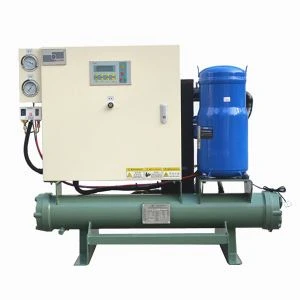
![Water Cooled Brazed Plate Type Stainless Scroll Chiller]() Water Cooled Brazed Plate Type Stainless Scroll ChillerFeature 1.Danfoss Scroll Compressor, High efficiency and reliability. 2.Danfoss thermal expansion valve, Reliabilityread more
Water Cooled Brazed Plate Type Stainless Scroll ChillerFeature 1.Danfoss Scroll Compressor, High efficiency and reliability. 2.Danfoss thermal expansion valve, Reliabilityread more -
![Air Cooled Scroll Chiller for Air Condition]() Air Cooled Scroll Chiller for Air Conditionnit control system using imported PLC program controller, man-machine interface configuration large screen touchread more
Air Cooled Scroll Chiller for Air Conditionnit control system using imported PLC program controller, man-machine interface configuration large screen touchread more -
![Computer Room Precision Air Conditioner]() Computer Room Precision Air ConditionerSANHE computer room precision air conditioners are special air conditioners designed for electronic equipment rooms.read more
Computer Room Precision Air ConditionerSANHE computer room precision air conditioners are special air conditioners designed for electronic equipment rooms.read more