What is Heat Exchanger?
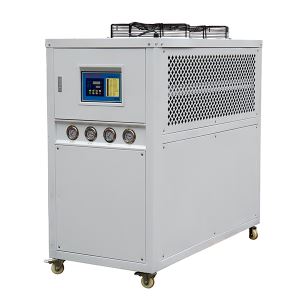
A heat exchanger is a device which transfers heat from one medium to another, a hydraulic oil cooler or example will remove heat from hot oil by using cold water or air. Alternatively a swimming pool heat exchanger uses hot water from a boiler or solar heated water circuit to heat the pool water. Heat is transferred by conduction through the exchanger materials which separate the mediums being used. A shell and tube heat exchanger passes fluids through and over tubes, where as an air cooled heat exchanger passes cool air through a core of fins to cool a liquid.
Advantages of Heat Exchanger
Efficient heat transfer
Heat exchangers provide efficient heat transfer between fluids, maximizing the utilization of thermal energy and reducing energy wastage.
Temperature control
Heat exchangers allow precise control of fluid temperatures, ensuring optimal operating conditions for various industrial processes and systems.
Compact design
Heat exchangers can be designed to have a compact and space-saving structure, making them suitable for installations with limited space availability.
Versatility
Heat exchangers are versatile and can be designed for various applications, accommodating different fluid types, flow rates, and temperature ranges.
-
![Shell and Tube Condenser Heat Exchanger]() Shell and Tube Condenser Heat ExchangerAs a partition wall heat exchanger, the shell-and-tube heat exchanger is the most widely used heat exchanger. The surface of the tube bundle enclosed in the casing acts as a heat transfer surface.read more
Shell and Tube Condenser Heat ExchangerAs a partition wall heat exchanger, the shell-and-tube heat exchanger is the most widely used heat exchanger. The surface of the tube bundle enclosed in the casing acts as a heat transfer surface.read more -
![Shell and Tube Evaporator Heat Exchanger]() Shell and Tube Evaporator Heat ExchangerUnder same cooling capacity, it can increase the heat transfer effect of the evaporator and reduce the volume.read more
Shell and Tube Evaporator Heat ExchangerUnder same cooling capacity, it can increase the heat transfer effect of the evaporator and reduce the volume.read more -
![U Type Evaporator]() U Type EvaporatorThe main feature of the U-tube evaporator is that the heat exchange tube structure is U-shaped, so only one tube plate and one end cover are needed. The structure is more compact than the straight tube evaporator.read more
U Type EvaporatorThe main feature of the U-tube evaporator is that the heat exchange tube structure is U-shaped, so only one tube plate and one end cover are needed. The structure is more compact than the straight tube evaporator.read more -
![Flooded Type Shell and Tube Evaporator]() Flooded Type Shell and Tube EvaporatorThe high-efficiency heat transfer tube that simultaneously enhances the boiling outside the tube and the heat transfer inside the tube increases the heat transfer coefficient by about 5 times compared with the light tube.read more
Flooded Type Shell and Tube EvaporatorThe high-efficiency heat transfer tube that simultaneously enhances the boiling outside the tube and the heat transfer inside the tube increases the heat transfer coefficient by about 5 times compared with the light tube.read more -
![Seawater Shell and Tube Heat Exchanger]() Seawater Shell and Tube Heat ExchangerCooling capacity range: 11,340kcal/h to 226800kcal/h. Condensation temperature: 40 ° C. Refrigerant: R22 (R134a/R407C)read more
Seawater Shell and Tube Heat ExchangerCooling capacity range: 11,340kcal/h to 226800kcal/h. Condensation temperature: 40 ° C. Refrigerant: R22 (R134a/R407C)read more -
![Titanium Shell and Tube Evaporator]() Titanium Shell and Tube EvaporatorThe length of the evaporator can be adjusted according to the length of the condenser to ensure that the size of the evaporator is configured to meet the customer's installation controls.read more
Titanium Shell and Tube EvaporatorThe length of the evaporator can be adjusted according to the length of the condenser to ensure that the size of the evaporator is configured to meet the customer's installation controls.read more


Why Choose Us?
High quality
Our products are manufactured or executed to very high standards, using the finest materials and manufacturing processes.
Rich experience
Dedicated to strict quality control and attentive customer service, our experienced staff is always available to discuss your requirements and ensure complete customer satisfaction.
Quality control
We have professional personnel to monitor the production process, inspect the products and ensure that the final product meets the required quality level standards, guidelines and specifications.
24h online service
We try and respond to all concerns within 24 hours and our teams are always at your disposal in case of any emergencies.
What are the Best Materials for a Heat Exchanger
You might think heat exchangers would always need to be made of metals, which quickly absorb and conduct heat—and many of them are. But heat exchangers can also be made of ceramics, composites (based on either metals or ceramics), and even plastics (polymers).
All these materials have their advantages. Ceramics are a particularly good choice for the kind of high-temperature applications (over 1000°c or 2000°f) that would melt metals like copper, iron, and steel, though they're also popular for use with corrosive and abrasive fluids at either high or low temperatures. Plastics generally weigh and cost less than metals, resist corrosion and fouling, and can be engineered to have good thermal conductivity, though they tend to be mechanically weak and may degrade over time. Although not generally suitable for high-temperature applications, plastic exchangers could be a good choice for something like a swimming pool or shower, operating at everyday, room-temperatures. Composite heat exchangers combine the best features of their parent materials—say, the high thermal conductivity of a metal with the reduced weight and better corrosion resistance of a plastic.
Double-pipe heat exchangers
Double-pipe heat exchangers, also known as a hairpin or jacketed pipe exchangers, are the simplest type of heat transfer equipment. They are made of two concentric pipes with different diameters. The process fluid flows through the smaller inner pipe, and the utility fluid flows through the annular space between the two pipes. The wall of the inner pipe acts as the conductive barrier between the two fluids wherein heat is transmitted. The countercurrent flow pattern is the most utilized, though it may be configured to co-current flow.
Shell and tube heat exchangers
Shell and tube heat exchangers are composed of tubes arranged in a bundle that is housed in a large cylindrical vessel called a shell. Similar to the double pipe heat exchanger, the wall of the inner pipe acts as the conductive barrier. The process fluid flows in the tube side, and the utility fluid flows on the shell side.
Gasketed plate heat exchangers
These types use gaskets to connect and seal the plates together. They are widely used in industries that require frequent sanitation, like food and beverage processing. Gasketed plates reduce maintenance costs since they are easy to clean, dismantle, and assemble. More plates may be added to increase the heat exchanger‘s capability and throughput. The disadvantage of this type is its potential for leakage.
Welded plate heat exchangers
Welded plate heat exchangers reduce the possibility of leakage. They are also similar to a gasketed plate heat exchanger, except that the plates are welded. They can handle higher temperatures, higher pressures, and more corrosive fluids since the operating temperature is not limited by the gasket seals. They are also more durable than gasketed plate heat exchangers. Since the plates are permanently fixed, manual cleaning is not possible.
Brazed plate heat exchangers
These heat exchangers have plates joined by a process called brazing, where two pieces of metal are joined by a molten filter metal. Brazing creates a low thermal resistant joint and is the reason brazed plate heat exchangers are so efficient. They are used in chillers, pumps, evaporators, and condensers. Brazed plate heat exchangers are efficient, compact (consume smaller floor space), and have long service life even under continuous exposure to high pressures.
Plate fin heat exchangers
These types consist of alternating layers of corrugated metal fins and flat metal plates called parting sheets. The fluid streams pass through the interface created by the fin and parting sheets. The parting sheets are the primary heat transfer surface. The fins create a secondary heat transfer surface, and they serve as the mechanical support of the plates against high internal pressures. The sidebars are also fixed to prevent the mixing of the two fluid streams. All components are bonded by brazing. Countercurrent flow configuration is incorporated in most designs.
Plate and shell heat exchangers
Plate and shell heat exchangers combine the best features of a shell and tube heat exchanger with a plate heat exchanger. A fully welded plate is placed into the shell to distribute stress and eliminate the need for gaskets. The a fluid passes through the plate side flow channel while the b fluid passes through the shell flow channel. The result of the design is a high heat transfer rate.
Flow Configuration of Heat Exchangers
Countercurrent flow
In countercurrent flow heat exchangers, the process and utility fluid streams flow in opposite directions. Countercurrent flow in heat exchangers is the most efficient and the most utilized flow pattern. A large temperature difference of the fluids is almost maintained constant across the length of the heat exchanger. This provides a more uniform heat transfer rate and minimizes thermal stress. It is also possible for the cold fluid to have an outlet temperature close to the inlet temperature of the hot fluid (highest temperature). This configuration requires less surface area compared to its co-current flow counterpart.
Co-current or parallel flow
In co-current or parallel-flow heat exchangers, the process and utility fluid streams flow in parallel directions. It is suitable if the outlet temperatures of the two fluids are nearly the same temperature. The temperature difference of the fluids is very large at the inlet and drastically decreases across the length of the heat exchanger, which causes large thermal stress and eventual material failure. This configuration has less efficiency compared to countercurrent flow.
Cross flow
In cross flow heat exchangers, the process and the utility fluids flow perpendicular to each other. They are commonly used on systems with gas-liquid or vapor-liquid heat exchange, wherein the gas or vapor is the process fluid. The liquid is contained in a tube and the gas flows outside those tubes. Examples of a cross flow heat exchanger are steam condensers, radiators, and air conditioner evaporator coils.
Hybrid flow
Hybrid flow heat exchangers are created by manufacturers to combine the characteristics of the above-mentioned flow configurations. Examples of hybrid flow patterns are shell-and-tube heat exchangers, cross flow-counter flow, and multi-pass flow heat exchangers.

At home
Around the home, they’re commonly found in central heating combi boilers and help to heat and cool down the water efficiently and safely. They’re also found in your refrigerator, ensuring it stays at a stable, cool temperature.
Public spaces
You’re also likely to have benefited from heat exchangers in public places. Your local swimming pool would be much colder without a heat exchanger helping to keep the water warm.
Car engines produce a lot of heat and this needs to be managed effectively to prevent dangers. Cars often use a combination of fans and air flow, with fins to dissipate heat, and the use of a coolant fluid.
Industrial
Heat exchangers are also used widely in different industrial applications. This includes power generation, the manufacture and storage of food, chemical engineering, and even in the running of air and marine transport, for example.
Sterling tt works with a range of industries to provide specialist heat exchangers. Find out more about the markets we serve.
Defence
Even in the defence sector, we find heat exchangers. They are installed, for example, on the navy surface and auxiliary ships as well as on submarines. They cool nuclear submarine propulsion motors.
How to Clean Heat Exchanger
Chemical cleaning
Chemical solutions are commonly used for heat exchanger cleaning and have proven effective in removing a wide range of deposit types. However, chemical cleaning has certain drawbacks, including the need for proper disposal of chemicals, potential environmental hazards, and the requirement for additional mechanical cleaning to ensure optimal results. The merrick group experts will review if chemical cleaning services are right for you.
Mechanical cleaning
Mechanical cleaning involves using tools that are selected based on the type of deposit to be removed. Molded plastic cleaners are effective for light silt, while brushes can be used for both microbial deposits and silt. Brushes can be adapted to clean tubes with various surface enhancements, such as fins, spirals, metal inserts, or epoxy coatings. Metal cleaners are designed for harder deposits and come in different designs to match the deposit and tube diameter. If you’re not sure which industrial cleaning service your equipment needs, trust the experienced team at the merrick group to make a recommendation.
High-pressure water cleaning
High-pressure water cleaning has become increasingly popular for heat exchanger cleaning due to its effectiveness. It can efficiently remove mineral deposits, scale, biological matter, and other debris. High-pressure water systems also facilitate easy collection of the removed deposits, allowing for better tracking of buildup levels over time and establishing a more regulated inspection and cleaning cycle.
Other cleaning systems and processes, such as combination air and water systems or compressed air systems, may also be available, each with their own specific practices and effectiveness depending on the tube and deposit characteristics. Regardless of the method used, it is crucial to rely on a highly trained heat exchanger cleaning service crew.
Precautions of Heat Exchanger


Before running the heat exchanger, we need to check whether the connecting pipe is tightened, and the system parameters will not exceed the allowable working pressure and temperature values on the manufacturing label.
Before starting the equipment, all the valves and vent valves of the equipment should be opened first, and then the inlet valve of the heat exchanger should be closed.
After starting the pump, we slowly open the outlet valve of the pump to make the pressure rise slowly. In order to avoid overpressure on one side, the inlet valves of the two media entering the heat exchanger should be opened at the same time, or slowly injected first. The low-pressure side medium is slowly injected into the high-pressure side medium.
At the beginning of operation, it is necessary to preheat in advance and gradually increase the temperature.
Do a good job of preheating the pressure reducing valve and adjusting it after it is put into operation.
When the unit is started, we should first open the valve on the cold side, wait for the equipment to stabilize, and then open the valve on the hot side. After shutting down, we should close the valve on the hot side, and then close the valve on the cold side.
After the heat exchanger is in normal operation, we should close the bypass valve of the steam trap of the steam-water heat exchanger. If the temperature of the steam trap is too low, such as below 50°c, the bypass valve can be opened for operation. When the condensate system is operated without pressure above ten degrees, the bypass valve needs to be closed to prevent steam from passing through and causing soda impact.
FAQ
We're well-known as one of the leading heat exchanger manufacturers and suppliers in China. Please rest assured to buy customized heat exchanger at competitive price from our factory. Contact us for more details.
cost effective heat exchanger, heat exchanger extrusion, heat exchanger replacement-
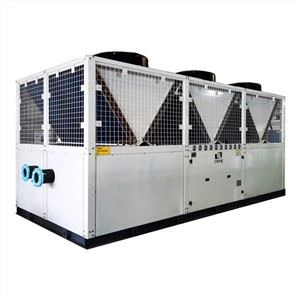
![Air Cooled Scroll Packaged Chiller]() Air Cooled Scroll Packaged ChillerThere will be 2~6 pieces scroll type compressor in this air cooled chiller , according to different capacity request.read more
Air Cooled Scroll Packaged ChillerThere will be 2~6 pieces scroll type compressor in this air cooled chiller , according to different capacity request.read more -
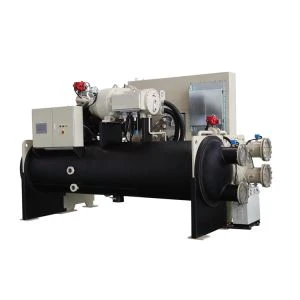
![R134a Magnetic Bearing Centrifugal Chiller]() R134a Magnetic Bearing Centrifugal ChillerWe have the advanced large on-line test bench for centrifugal chiller, each unit undergoes a full performance testread more
R134a Magnetic Bearing Centrifugal ChillerWe have the advanced large on-line test bench for centrifugal chiller, each unit undergoes a full performance testread more -
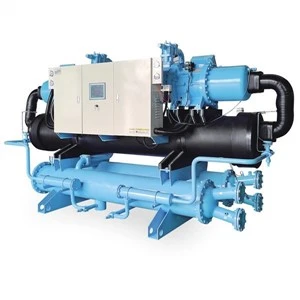
![Water Cooled Screw Liquid Chiller]() Water Cooled Screw Liquid ChillerWater cooled screw liquid chiller (dual compressor) uses two screw compressors, it is two independent refrigerationread more
Water Cooled Screw Liquid ChillerWater cooled screw liquid chiller (dual compressor) uses two screw compressors, it is two independent refrigerationread more -
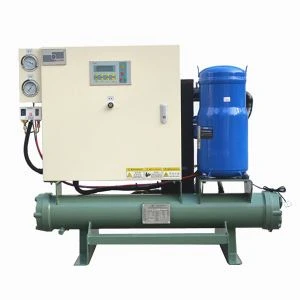
![Water Cooled Brazed Plate Type Stainless Scroll Chiller]() Water Cooled Brazed Plate Type Stainless Scroll ChillerFeature 1.Danfoss Scroll Compressor, High efficiency and reliability. 2.Danfoss thermal expansion valve, Reliabilityread more
Water Cooled Brazed Plate Type Stainless Scroll ChillerFeature 1.Danfoss Scroll Compressor, High efficiency and reliability. 2.Danfoss thermal expansion valve, Reliabilityread more -
![Air Cooled Scroll Chiller for Air Condition]() Air Cooled Scroll Chiller for Air Conditionnit control system using imported PLC program controller, man-machine interface configuration large screen touchread more
Air Cooled Scroll Chiller for Air Conditionnit control system using imported PLC program controller, man-machine interface configuration large screen touchread more -
![Computer Room Precision Air Conditioner]() Computer Room Precision Air ConditionerSANHE computer room precision air conditioners are special air conditioners designed for electronic equipment rooms.read more
Computer Room Precision Air ConditionerSANHE computer room precision air conditioners are special air conditioners designed for electronic equipment rooms.read more